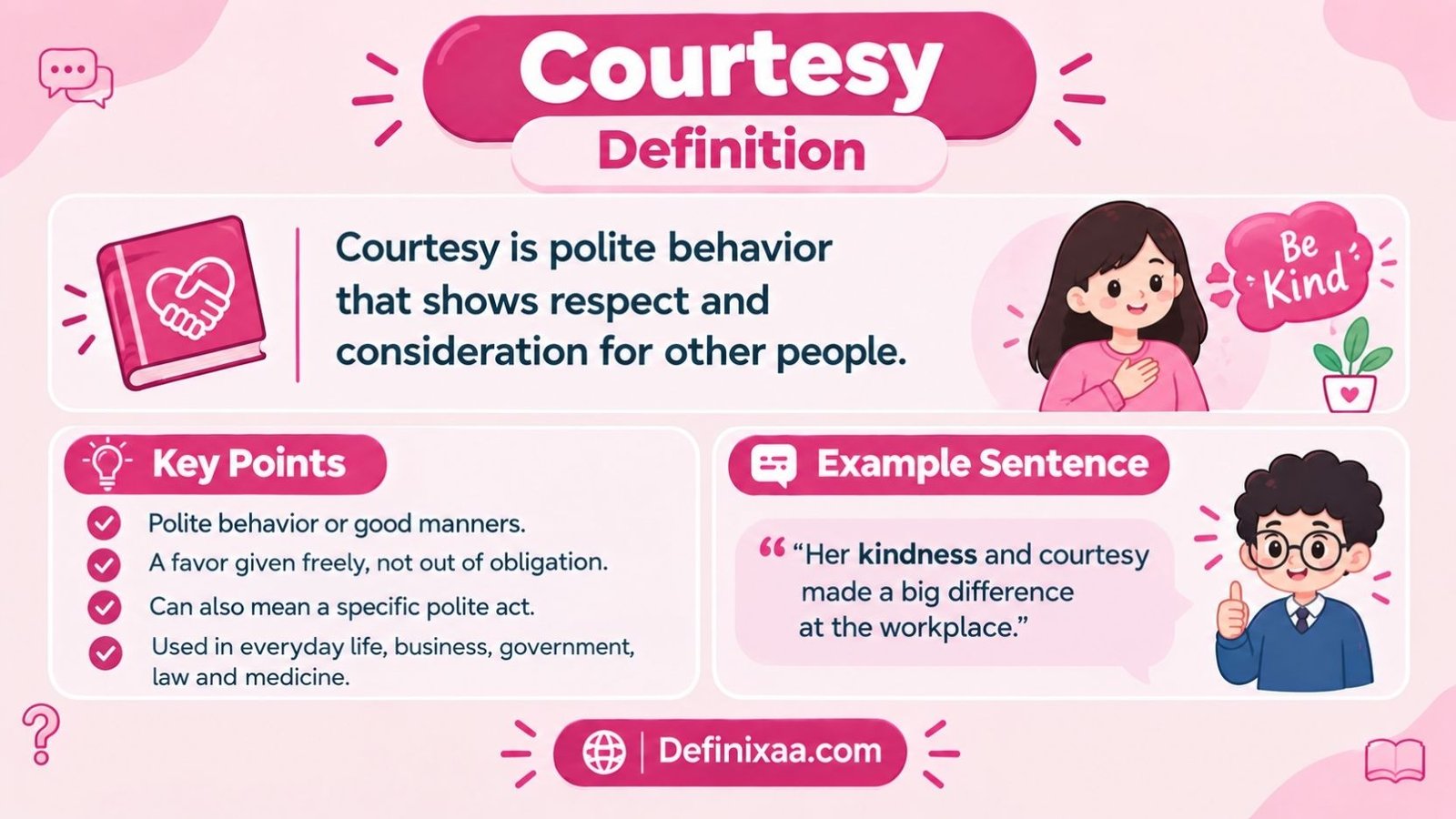
Courtesy is polite behavior that shows respect and consideration for other people. It can also mean a single polite act, or a favor given freely rather than out of obligation. The word covers everything from everyday good manners to specific customs in government, business, and medicine.
At A Glance
| Detail | Information |
| Meaning | Polite, respectful behavior, or a specific polite act |
| Word type | Noun (also used as an adjective, as in “courtesy call”) |
| Tone | Generally positive |
| Common context | Everyday manners, business, travel, government |
| Pronunciation | KUR-tuh-see |
| Related terms | Politeness, civility, respect, etiquette |
So, What Is Courtesy In Simple Terms?
At its core, courtesy is just being polite. It means treating people with respect through your manners and behavior, whether that’s holding a door open, saying “please” and “thank you,” or greeting someone warmly.
The word also covers something you do or offer voluntarily, not because a rule forces you to. You might do a favor for someone as a courtesy, meaning you did it out of kindness rather than obligation.
There’s a third, less obvious sense too: courtesy can describe a kind of polite indulgence, where something is accepted or labeled a certain way despite the facts, simply out of politeness. A small pond called a “lake,” or a retired official still addressed as “Senator” out of respect, are both examples of a title or label used loosely, by courtesy rather than by strict accuracy.
Note: Courtesy is almost always a positive word. It signals respect, warmth, or generosity. The main exception is when it appears in a slightly resigned tone, as in “common courtesy,” which usually points out that someone failed to meet a basic standard of politeness.
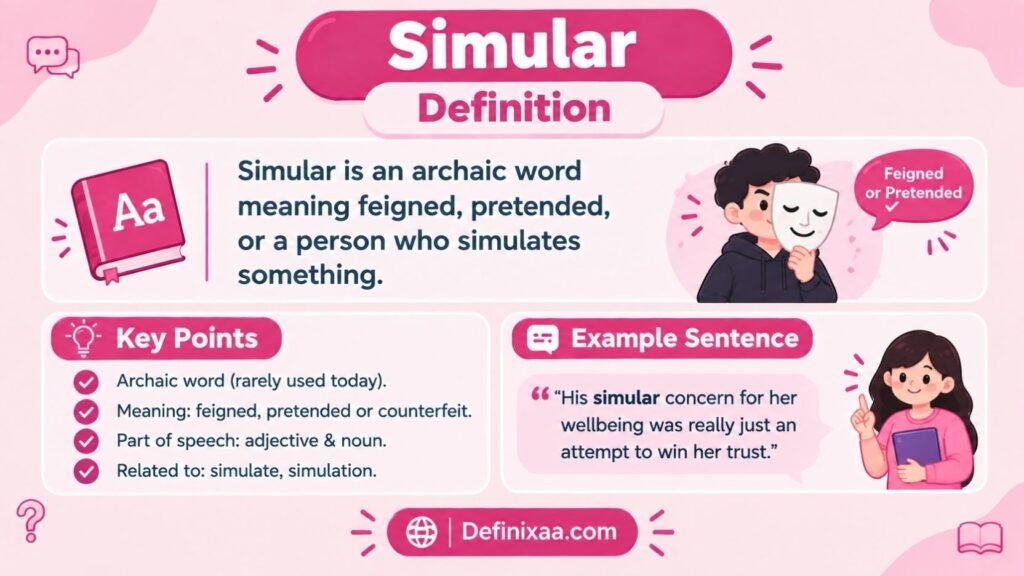
Read More: Simular Definition
Courtesy Pronunciation
Courtesy is pronounced KUR-tuh-see (IPA: /ˈkɜːrtəsi/), with the stress on the first syllable. It is unrelated in pronunciation to “curtsy,” the bow-like gesture, even though the two words share a common ancestor.
Where Does the Word Courtesy Come From?
Courtesy entered English between roughly 1175 and 1225, coming from the Middle English word “curteisie” by way of Anglo-French and Old French, ultimately tracing back to the Old French “corteis,” meaning courtly or courteous.
The root idea is behavior fit for a royal court: refined manners, polished speech, and respectful conduct. Over time, the word broadened from formal court etiquette to everyday politeness of any kind. This is also why “courtesy” and “curtsy” are historically connected: curtsy actually began as an older spelling of the same word, before the bowing gesture kept that spelling while “courtesy” kept the broader meaning of politeness.
How Is Courtesy Actually Used in Real Life?
Courtesy shows up constantly in ordinary speech, and its exact shade of meaning shifts depending on context.
In everyday conversation: Courtesy usually just means good manners. Someone might say a coworker “always treats clients with courtesy,” meaning they are polite and considerate.
In business and travel: Courtesy often describes something offered for free, as a goodwill gesture. Airlines rebook stranded passengers as a courtesy, hotels run a courtesy shuttle, and conferences supply courtesy cars for important guests. Journalists commonly use the phrase “courtesy of” to credit who provided something, whether that’s a quote, a service, or even a stretch of unusually warm weather caused by a high-pressure system.
In formal or diplomatic settings: A courtesy call or courtesy visit is a polite, largely ceremonial visit paid out of respect rather than urgent necessity. One well-known literary example describes an heir obliged to pay a courtesy call on a British ambassador, purely as a matter of protocol.
In greetings and small talk: The plural “courtesies” refers to the small polite exchanges people make when they meet. People who already know each other well might skip “the usual courtesies,” meaning the standard polite greetings.
What Does Courtesy Look Like In A Sentence?
Here are original examples showing courtesy used in different everyday situations.
- Casual conversation: “She always answers the phone with such courtesy, even when she’s clearly busy.”
- Professional setting: “As a courtesy to new clients, the firm offers a free thirty-minute consultation.”
- Travel and hospitality: “The airline provided a courtesy meal voucher after the long delay.”
- Online or written communication: “Out of courtesy, please let the group know if you can’t make the meeting.”
- Formal or diplomatic context: “The visiting delegation paid a courtesy call on the mayor before the official talks began.”
Common Courtesy: What It Really Means
Common courtesy means the basic politeness people can normally be expected to show one another. It isn’t about elaborate manners; it’s the minimum baseline, such as acknowledging someone who greets you or thanking a person who helps you.
The phrase is most often used to point out when someone fails to meet even that minimum, as in noting that a person didn’t have “the common courtesy” to say goodbye before leaving. The phrase usually carries a slightly disappointed tone, because it implies the person fell short of a very low bar.
Professional Courtesy
Professional courtesy describes the respectful conduct expected between people in the same field or workplace. It includes things like acknowledging a colleague’s expertise, giving proper credit for work, responding to messages promptly, and treating coworkers and clients with basic respect regardless of rank or role.
This sense of courtesy overlaps closely with workplace etiquette. It is less about formal rules and more about the unwritten standards that keep working relationships civil and functional.
Senatorial Courtesy: The Political Science Meaning
Senatorial courtesy is a completely different, more technical use of the word, and it is one of the most frequently searched meanings, especially by students studying American government.
Direct definition: Senatorial courtesy is a long-standing, unwritten custom in the United States Senate. Under it, senators generally support a colleague who opposes a presidential nominee from that colleague’s own state, effectively giving that senator veto power over the nomination.
In simple terms: When a president wants to appoint someone to a federal position tied to a specific state, such as a federal judge or U.S. attorney, the Senate typically will not confirm that nominee if the senators from that state object. This gives individual senators real influence over nominations that affect their home state.
Why does this custom exist?
The practice grows out of a general sense of collegiality among senators, along with the assumption that a senator will have the best firsthand knowledge of a nominee’s character and qualifications from their own state. It is also considered an important source of political patronage for senators, since it lets them steer appointments toward supporters back home.
Does it apply to every senator?
No. The custom generally only applies when the president and the relevant senator belong to the same political party. In that situation, the president will typically consult the senator before submitting a nomination tied to their state, partly to avoid a politically costly rejection later.
Is senatorial courtesy an actual Senate rule?
No. Despite being a strong tradition, senatorial courtesy is not a formal rule and does not appear in the Senate’s official rules of procedure. It is an unwritten convention, upheld by custom rather than law.
Where does senatorial courtesy apply?
The tradition mainly applies to federal district court nominations opposed by a same-party senator from the nominee’s home state, and it also extends to federal courts of appeals nominations opposed by a same-party senator from that circuit’s states. It generally applies to appointments tied to a single state or region rather than nationwide positions like a Supreme Court seat.
A brief historical note
Senatorial courtesy traces back to the presidency of George Washington. The Senate refused to confirm his nominee, Benjamin Fishbourn, for a position in Georgia after Georgia’s own senators objected, establishing a pattern that has held, informally, ever since.
Quick takeaway on senatorial courtesy: It is not a law. It is a long-standing habit of deference that gives individual senators outsized influence over nominations tied to their home states, and it only reliably works when the president and that senator belong to the same political party.
Note: New Jersey has its own, separate state-level version of this idea. In the New Jersey State Senate, senatorial courtesy is an unwritten rule under which a senator can block a governor’s nominee if that nominee comes from the senator’s own home county or district. This is a distinct state government custom, separate from the federal Senate practice described above.
Courtesy Call Meaning
A courtesy call has two related but distinct uses.
In diplomacy, business, and etiquette, a courtesy call is a polite, largely formal visit made out of respect for someone’s position, not because of urgent business. Visiting dignitaries paying a courtesy call on a local official is a classic example.
In customer service and everyday business, a “courtesy call” often just means a phone call made as a considerate gesture, such as a dentist’s office calling to confirm an appointment, or a company calling a customer to check whether a service was satisfactory.
Courtesy Meeting Meaning
A courtesy meeting works the same way as a courtesy call, but in person or as a scheduled meeting rather than a phone call. It’s a meeting held mainly out of respect or protocol, often brief, and often without a major decision on the agenda. New executives, incoming officials, or visiting partners frequently hold courtesy meetings simply to introduce themselves and establish a respectful relationship.
Courtesy Message Meaning
A courtesy message is a short, considerate notice sent mainly to be polite, rather than because it is strictly required. Examples include a text letting someone know you’ll be a few minutes late, an email confirming you received a document, or a note thanking someone for their time. The core idea is the same across every use of the word: an action taken out of respect and good manners, not obligation.
Courtesy Of Someone: What This Phrase Means
“Courtesy of” is used to credit who provided or made something possible, often for free or as a favor. You might see it describing a costume provided for a play by a local department store, or a meal covered by a friend or relative.
It’s also common in journalism and everyday speech to credit a source or cause. A newspaper might note that a translation is courtesy of an orchestra, or that a stretch of warm weather is courtesy of a high-pressure system. In this usage, “courtesy of” simply means “thanks to” or “provided by.”
Courtesy Of Meaning With Example
“Courtesy of” can describe either a generous gift or, in a wry tone, an unwelcome outcome someone is indirectly responsible for.
Positive example: “Dinner tonight is courtesy of my parents, who insisted on treating us.”
Neutral/informational example: “The delay was courtesy of a mechanical issue with the aircraft.”
Slightly ironic example: “I have a headache this morning, courtesy of last night’s loud concert.”
Courtesy Definition For Kids
For a younger reader: courtesy means being polite and thinking about other people’s feelings. It means saying “please” and “thank you,” waiting your turn, holding the door for someone, and being kind even when nobody is telling you to be.
What Words Mean Something Similar to Courtesy?
Common synonyms include a customary show of good manners, and speech or behavior that reflects good breeding or attentiveness toward others. In plainer language, the closest everyday equivalents are:
- Politeness
- Civility
- Respect
- Consideration
- Good manners
- Graciousness
Related but not identical: Etiquette refers to a specific set of formal social rules, while courtesy is broader and more about the underlying respectful attitude. You can show courtesy without following every rule of formal etiquette, and you can follow etiquette rules without genuine courtesy behind them.
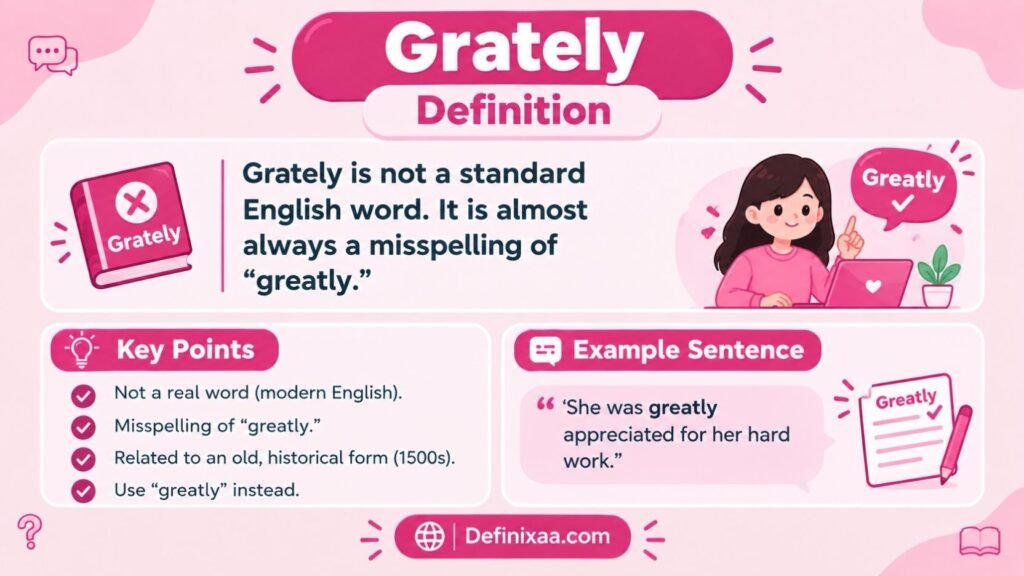
Read More: Grately Definition
Is Courtesy The Same As Politeness?
Not quite, though the two overlap heavily. Politeness usually refers narrowly to correct, socially expected behavior in a given moment. Courtesy carries a slightly warmer connotation, often implying genuine thoughtfulness or generosity, not just following social rules.
| Term | Meaning | Typical Use | Key Difference |
| Courtesy | Respectful, considerate behavior, or a favor given freely | Everyday interactions, business, formal visits | Often implies warmth or generosity, not just correctness |
| Etiquette | A specific, formal system of social rules | Weddings, formal dinners, diplomatic protocol | Focuses on precise rules rather than general attitude |
Before You Use Courtesy, Remember This
Courtesy is a broad, mostly positive word with several specialized meanings depending on the field. The everyday sense (politeness) has almost nothing in common, structurally, with senatorial courtesy (a political custom) or courtesy privileges (a hospital credentialing category). Always check the context before assuming which sense applies, especially in professional or academic writing.
Courtesy Clerk Definition
A courtesy clerk is an entry-level retail employee, most often found in grocery stores, who handles customer-facing support tasks. The role centers on greeting customers and helping them locate items in the store, along with related duties.
Typical responsibilities include bagging groceries efficiently, helping verify prices, retrieving shopping carts from the parking lot, keeping the store and restrooms clean, and greeting and thanking customers in a friendly, professional manner. Some stores also expect courtesy clerks to restock shelves and assist at the customer service counter.
The job title uses “courtesy” in its original sense: politeness and helpfulness toward customers is the core of the role.
Courtesy Car Definition
A courtesy car is a vehicle a business lends to a customer temporarily, at no charge, as a goodwill gesture. Auto repair shops commonly provide a courtesy car to customers while their own vehicle is being serviced, and conferences or hotels sometimes offer courtesy cars to important visitors. The point of a courtesy car is convenience and goodwill, not profit for the business providing it.
Courtesy Hospital Privileges Definition
This is a specific credentialing category in American medicine, distinct from every other meaning on this page.
Direct definition: Courtesy privileges are one of the main categories of hospital privileges. They sit alongside admitting privileges, clinical or surgical privileges, and full active staff privileges, and they represent a more limited tier of hospital access.
In simple words: Courtesy privileges give limited hospital access to physicians who mainly practice elsewhere but occasionally need hospital services for their own patients. For example, a doctor whose main practice is at one hospital might hold courtesy privileges at a second, more conveniently located hospital.
Important limitation: Courtesy privileges typically let a physician visit a patient who has been admitted, but they generally do not allow that physician to actually treat the patient at that facility. They show an association with the hospital rather than a full right to practice there.
Note: Physicians with courtesy privileges usually carry fewer responsibilities and less voting power in hospital affairs compared to physicians with full active staff privileges.
Courtesy Flush Definition
A courtesy flush is, often humorously, a flush of the toilet performed partway through use, intended to reduce an unpleasant smell for the next person. The term is informal and mostly used in casual or humorous conversation rather than formal writing.
Where it’s used: Almost exclusively in casual speech, informal writing, and comedy. It has no official plumbing or medical definition. It became widely recognized in popular culture partly through a well-known bathroom scene in a 1990s comedy film, after which the phrase became a familiar piece of everyday bathroom vocabulary.
Tone: Informal and typically humorous, occasionally slightly crude depending on context.
Courtesy Stigma Definition
Courtesy stigma is an academic, sociological term, and it has nothing to do with politeness at all.
Direct definition: Courtesy stigma, also called “stigma by association,” refers to the public disapproval that results from associating with a stigmatized individual or group.
Origin of the concept: The concept was introduced in 1963 by sociologist Erving Goffman, who extended his broader concept of stigma to include people who experience disapproval simply because of their association with a stigmatized person.
Real-world example: Family members of someone with a mental illness, or parents of a child with a behavioral condition, can experience courtesy stigma when others question whether the condition is hereditary or the result of poor parenting. Researchers have also studied courtesy stigma among front-line workers who support socially stigmatized groups, since that association can affect the workers’ own social standing and workplace experience.
This use of “courtesy” is unusual: it does not mean politeness at all. It draws on the older, secondary sense of something extended to a person indirectly, through their association with someone else, rather than earned or experienced firsthand.
Courtesy Bidding Definition
In card games, particularly bridge, “courtesy bidding” is not a single, widely standardized official term, and definitions vary by community and region. Players generally use it informally to describe a bid made mainly to keep the auction moving or to acknowledge a partner’s signal, rather than one that reflects genuine bidding strength.
Because usage varies between bridge clubs and conventions, players should confirm the specific meaning with their own group rather than assuming one universal rule.
Is Courtesy Formal, Informal Or Both?
Courtesy itself is a fairly formal, neutral word suitable for professional writing, everyday speech, and academic contexts alike. However, several of its compound uses split sharply by register:
- Formal: Senatorial courtesy, courtesy privileges, courtesy call (diplomatic sense), professional courtesy
- Neutral, everyday: Common courtesy, courtesy of, courtesy clerk, courtesy car
- Informal, sometimes humorous: Courtesy flush
Is Courtesy Positive, Negative Or Neutral?
Courtesy is overwhelmingly positive. It signals respect, kindness, and consideration. The rare exceptions are:
- Slightly critical: “Common courtesy” often appears in sentences pointing out that someone failed a basic standard.
- Ironic or resigned: “Courtesy of” can introduce something unwanted, such as an injury or an inconvenience someone indirectly caused.
- Neutral/technical: Senatorial courtesy, courtesy privileges, and courtesy stigma are neutral, descriptive terms used in specific professional fields, without a built-in positive or negative charge.
What Does Courtesy Not Mean?
- Courtesy does not mean formal legal obligation. Something done “as a courtesy” is, by definition, not required.
- Courtesy does not mean the same thing as flattery or insincerity. Genuine courtesy is about respect, not manipulation.
- Senatorial courtesy is not an actual Senate rule or law. It is an unwritten custom.
- Courtesy privileges do not give a physician the right to treat patients at a hospital. They typically only allow visiting or occasional, limited use of the facility.
- Courtesy stigma is not about being polite. It describes stigma transferred through association, a completely separate, unrelated meaning of the word.
When Should You Use the Word Courtesy?
Use “courtesy” when you want to describe:
- General politeness in speech or writing (“She responded with great courtesy.”)
- A favor or service given voluntarily (“The upgrade was offered as a courtesy.”)
- Crediting a source (“Photo courtesy of the local historical society.”)
- A specific named custom or category in government, business, or medicine, when that context is clear.
Avoid using “courtesy” when you actually mean a legal requirement, a formal rule, or an obligation. In those cases, words like “requirement,” “obligation,” or “policy” are more accurate.
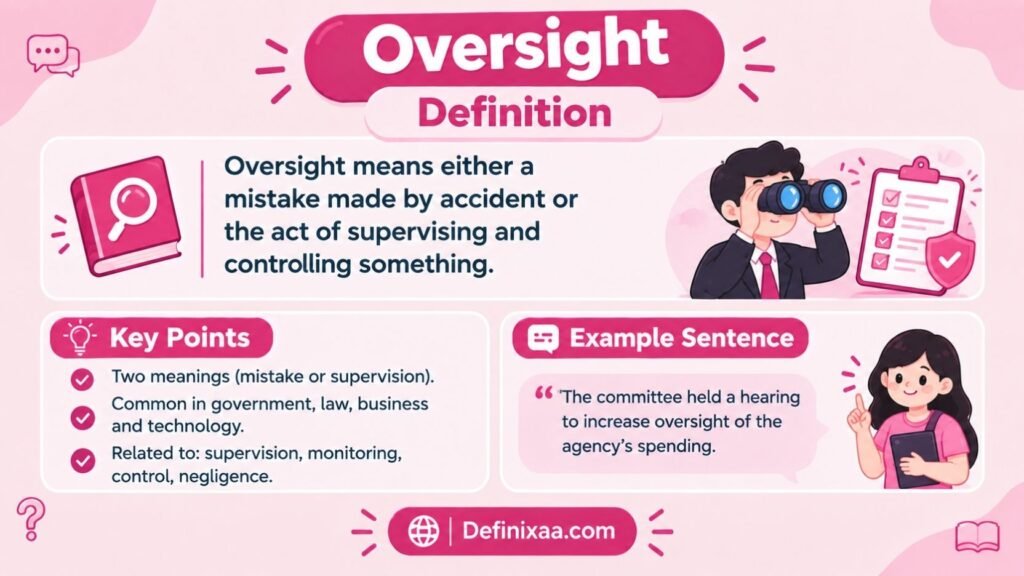
Read More: Oversight Definition
Frequently Asked Questions
What does courtesy mean in one sentence?
Courtesy means polite, respectful behavior toward other people, or a specific act done out of politeness rather than obligation.
Is courtesy the same as manners?
They are closely related. Manners usually refers to specific learned behaviors, such as saying “please,” while courtesy refers more broadly to a respectful, considerate attitude behind those behaviors.
How do you pronounce courtesy?
Courtesy is pronounced KUR-tuh-see, with the stress on the first syllable.
What is senatorial courtesy in simple terms?
It’s an unwritten tradition where the Senate generally won’t confirm a presidential nominee tied to a specific state if that state’s senators, from the president’s own party, oppose the nomination.
Is senatorial courtesy an actual law?
No. It is a long-standing custom, not a formal Senate rule listed in the Senate’s official rules of procedure.
What does “courtesy of” mean?
It means “provided by” or “thanks to,” used to credit the source of something, whether a gift, a service, or even a weather pattern.
What is a courtesy call?
A courtesy call is a polite visit or phone call made mainly out of respect or protocol, not because it’s strictly required.
What does common courtesy mean?
Common courtesy means the basic level of politeness that people can generally be expected to show one another.
What are courtesy privileges at a hospital?
They are a category of hospital privileges that allow a physician occasional, limited use of a hospital’s facilities, typically without full admitting or treatment rights there.
What is courtesy stigma?
It’s public disapproval experienced simply because a person is associated with a stigmatized individual or group, a concept introduced by sociologist Erving Goffman.
Is a courtesy flush a real term?
Yes, informally. It refers to flushing a toilet mid-use to reduce odor, and it’s used mainly in casual or humorous speech, not formal or technical writing.
What’s the difference between courtesy and etiquette?
Courtesy is the general respectful attitude behind polite behavior. Etiquette is a more specific, formal set of social rules for particular situations.
The Simple Takeaway
Courtesy, at its heart, is about respect and consideration for other people, whether that’s a friendly greeting, a free upgrade, or a formal diplomatic visit. The word branches into very different specialized meanings in government, medicine, retail, and sociology, so context always matters. When in doubt, the everyday sense, polite and considerate behavior, is almost always the right one to assume.